

Death is a part of life, and it’s one of the things that sometimes makes us seek the comfort and escapism of television — even though death is a part of television, too. Some deaths leave a permanent mark on viewers, and our staff has compiled their picks for the most devastating losses in their fictional worlds.
Norma Bates (Bates Motel) – Mariana Delgado

Norma Bates is perhaps one of film history’s most infamous mother figures. Ironic, considering her role in Alfred Hitchcock‘s 1960 Psycho remained little more than set dressing — a corpse in a basement and the inner monologue of a madman’s deteriorating mental state. It wasn’t until Vera Farmiga barreled through television screens in 2013’s Bates Motel that Norma Bates became a fully-fledged character in the media canon. Set in contemporary 2013, Bates Motel is a prequel that examines the turbulent nature of Norman (Freddie Highmore) and Norma’s relationship and what ultimately leads Norman to become a serial killer. In broad brushstrokes, a Norman Bates origin story quickly becomes a character study of Farmiga’s dynamic interpretation of Norma Bates.
Everyone knows what happens to Norma at the end of Psycho. One of the film’s most shocking revelations is that Norman killed his mother and left her rotting corpse in the basement while taking on a “Norma persona” during his acts of violence. Not a lot is revealed about Norma that isn’t inherently told through either Norman or other male characters in the film. This is why Farmiga’s Norma Bates becomes so crucial to the canonization of Norma as a character. It is also why her ultimate death in season four of Bates Motel becomes almost unbearable to witness. After four seasons of Farmiga’s complex and heartbreaking portrayal of a woman who went through countless abusive relationships, even at the hands of her own brother, only to keep persevering in a world that would never let her be happy made that death all the more tragic.
Norma’s fate throughout the series becomes a form of haunting the narrative. Every moment of Norma’s life on Bates Motel is bittersweet, knowing that no matter what she does or how much she fights for a single scrap of happiness, it’ll be for naught in the end. While the moment itself is agonizing to witness, as Norma dies of carbon monoxide poisoning in Norman’s attempt at a murder-suicide, the entire narrative structure becomes the real tragedy. Setting this story in a contemporary setting suggests a chance at a rewrite of the original text, which could mean a rewrite of Norma’s fate from canon. The narrative within the narrative becomes hard to witness as the series decides to stick to the rigid boundaries of a canon that didn’t contextualize its modern world.
Rhaenys Targaryen (House of The Dragon) – Lara Rosales

When I started watching House of the Dragon, I had no idea who anyone was. I had never seen Game of Thrones, so the Targaryen name didn’t really mean anything to me. However, I fell in love with the world represented in the show, and as hard as it is to fall for a character, I fell for Rahenys Targaryen (Eve Best). The Queen Who Never Was quickly became The Queen Who Should Have Been because of everything she represented.
Rhaenys was never afraid to face the enemy and do what was necessary to protect those she loved. It is that belief and resilience that led her to her death. When no one else could face the enemy, she rode on her dragon to do so. She didn’t back down from the battle and turned around to face a larger dragon when she knew that would mean her death. In doing so, she tries to protect the real heir to the iron throne.
The episode in which Rhaenys dies is the best of House of the Dragon Season 2. Every audience member cries when we see her and her dragon falling to their death. It is an honorable death that she would choose for herself in every reality. She dies with her dragon surrounded by fire; nothing is better for a Targaryen.
Nate Fisher (Six Feet Under) – SGM

I recently watched Six Feet Under for the first time over the summer because I was going through what I hadn’t seen in Peter Krause‘s filmography. The only thing I knew going into the show was that everybody died at the end. For the last twenty years, I’ve had a very vivid memory of David Fisher (Michael C. Hall) dying. But this isn’t about David. It’s about his older brother, Nate (Peter Krause).
Nate is the one member of the Fisher family who doesn’t die in the finale. He dies in the final season’s tenth episode, two episodes before the series finale. As the eldest child in the Fisher family, his death devastates the family even more so than the death of their patriarch, Nathaniel Sr. (Richard Jenkins), in the series’s pilot.
When Nathaniel Sr. died, it brought Nate back to his family and made the Fishers closer than ever before. Nate’s loss hits so hard because he was the heart of the family.
What kills you the most about his death is that you don’t see it coming –they’d already done a fake-out with his death earlier in the series. It’s a sudden brain hemorrhage from an AVM that does him in – a diagnosis that he’d received in season one that had been resolved later on with an incredibly risky surgery. It happens when it seems like the Fisher family’s finally gotten back on track from their father’s death when they’re finally in a good place with one another. The Fisher siblings are grown adults who get along and want to be around each other – Claire (Lauren Ambrose), as the youngest sibling in particular, has grown to love the older brother she could barely stand at the beginning, and as a parent himself, Nate now understands where his mother, Ruth (Frances Conroy), is coming from.
I’m not going to pretend that Nate was perfect because he was far from it. He was incapable of being a good partner and crass as hell sometimes. His redeeming quality was his love of his family. While he might not have been a great partner, he was a doting father, older brother, and son. At his best, he was silly, loving, and absolutely charming, even if he was a whore, and that’s what made him so loveable.
And who can forget his final lines in the series, which are absolutely a punch in the gut? Just thinking about them makes me sick to my stomach.
You can’t take a picture of this. It’s already gone.
Lexie Grey (Grey’s Anatomy) – Vynique Moon
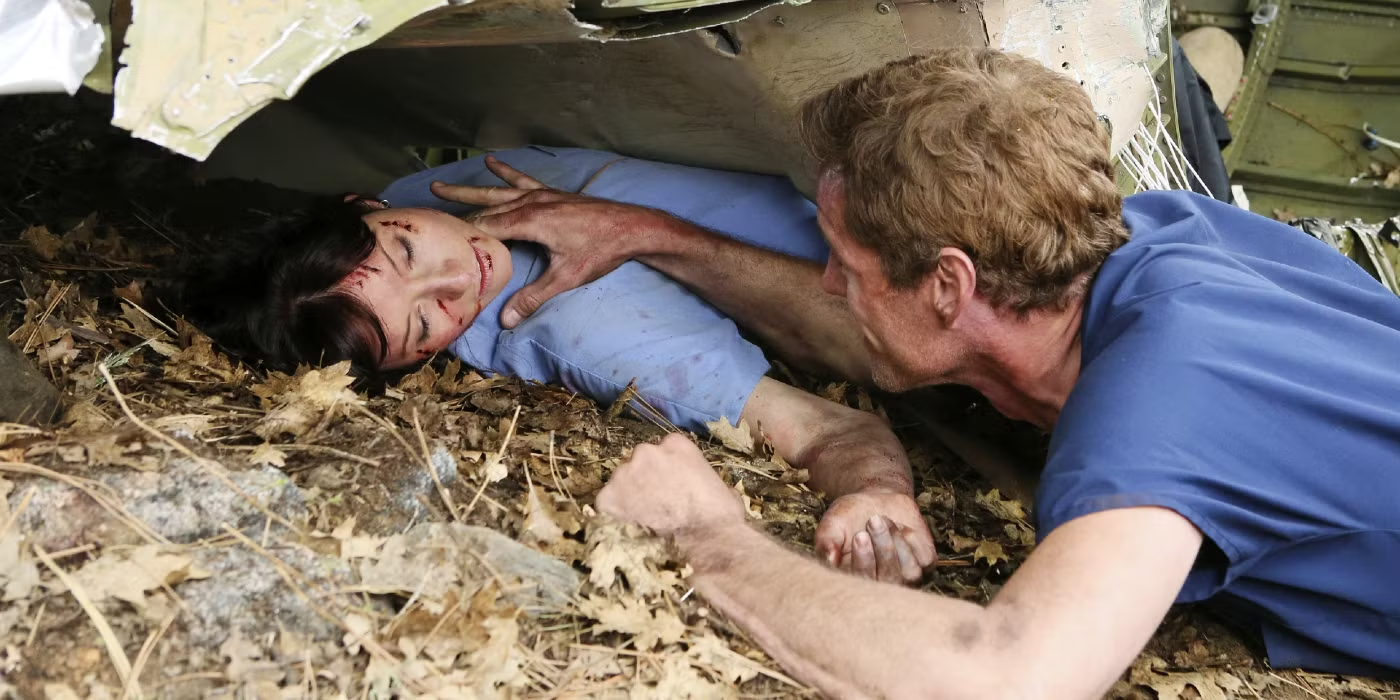
The other day I was giggling over being reminded that Lexie Grey used to be in love with George O’Malley (T.R. Knight). It’s a plot point that I haven’t thought about in probably a decade at this point, but it made me think of the crazy journey her character went on throughout her time on the show. She was never my favorite character, but I did love her, and Chyler Leigh’s endearing portrayal of the character’s growth definitely made her a fan favorite.
She was just getting around to reconciling with her long-term ex-partner Mark Sloan (Eric Dane), another fan favorite and my beloved, when she died. The plane crash episode of Grey’s Anatomy wrecked the hell out of me when I watched it and is appropriately infamous.
Lexie, Mark, Arizona Robbins (Jessica Capshaw), Cristina Yang (Sandra Oh), and Lexie’s sister Meredith Grey (Ellen Pompeo) are all on a plane to take them to perform a transplant surgery when their plane crashes. Lexie is critically injured and pinned under part of the plane, and it is so heartbreaking; oh my god.
Her big sister is there, and Mark is there telling her that she’ll be okay and he loves her, and they’ll be rescued and be together, and it is just horrific. Lexie dies a slow painful death in the middle of the woods with her sister and the love of her life there to watch.
Grey’s Anatomy is known for its devastating deaths, but this is the worst one for me. Not only does she die in this horrible way, but her body is partially eaten by wolves because they end up stranded out there for weeks.
I will never recover from that or from the fact that after Mark is rescued, his condition deteriorates, and he dies after having reaffirmed his love for her.
Like, okay.
Evil.
It was a death with so many wide-reaching consequences outside of the death itself, and the show lost so much of its vibrancy after it happened. Lexie had a light and bounciness to her that wasn’t overbearing or annoying but balanced out the darker parts of the show, and it was obvious how much the show needed it when she was gone.
Oberyn Martell (Game of Thrones) – Leah Carlson
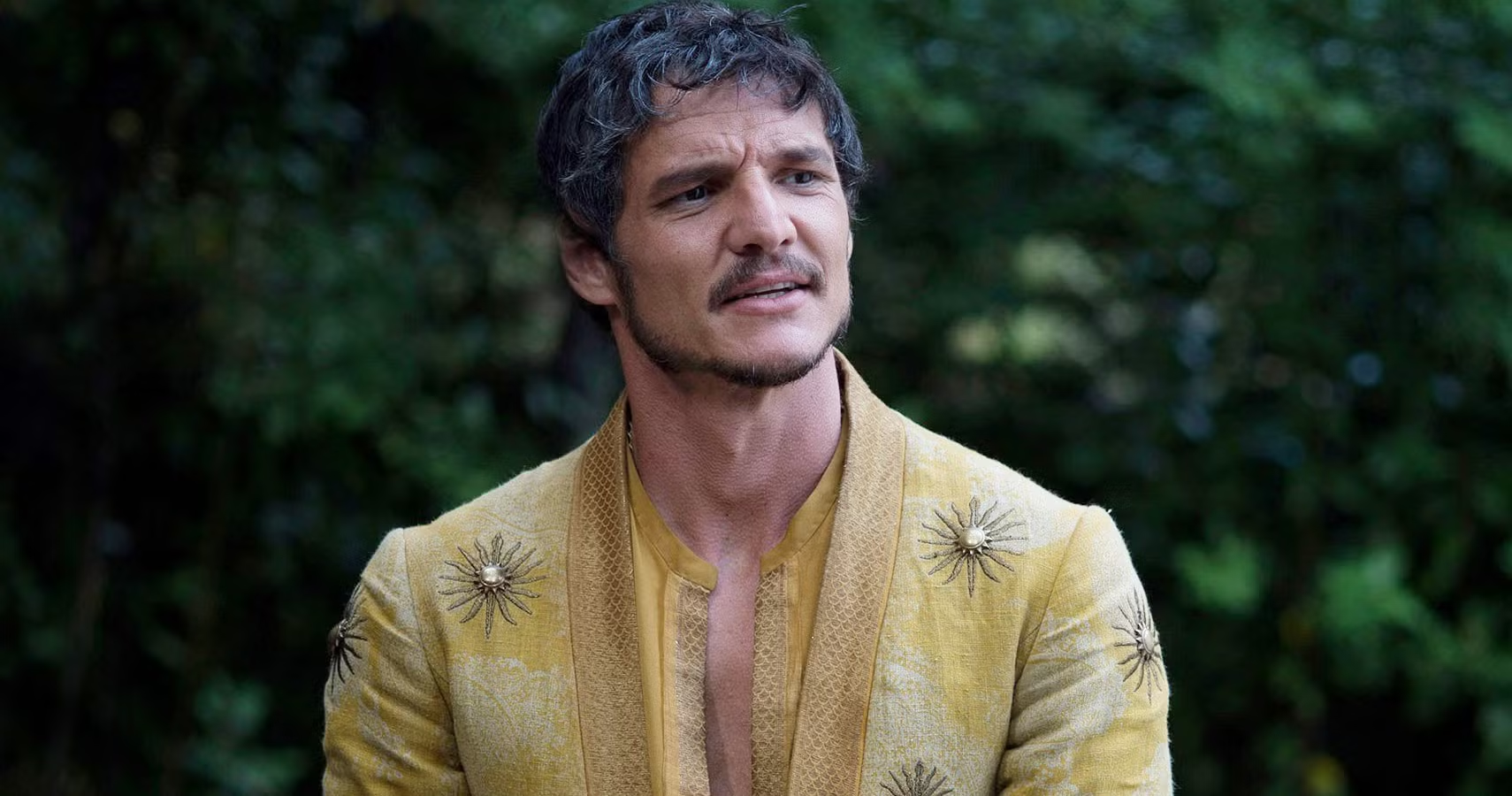
Compared to some of the deaths on this list, the demise of a one-season supporting character on a show with seventy simultaneous plotlines perhaps feels like it shouldn’t count as “devastating.” But even on a show known for suddenly killing characters in various gruesome fashions, Oberyn Martell’s death hurts. Some of this is down to Pedro Pascal’s star-making turn. Oberyn makes an immediate impression when he bursts into King’s Landing like a dazzling ray of Dornish sunshine, firmly anti-Lannister, and as close to a hero as one gets in Game of Thrones. Pascal imbues Oberyn with a truly formidable sexual charisma, an innate likeability, and an insouciant charm that belies the character’s coiled intensity. Pascal’s Oberyn instantly wins you over, so of course, it’s a gut punch to see him go.
The mere fact of Oberyn’s death is not what lands him on this list, however. As a reader of the books, I knew it was coming as season four drew to a close. No, it’s how Oberyn goes, rendered so vividly and horribly on screen, that earns his death a permanent spot in my memory. Oberyn meets his maker during a trial by combat in which he fights his mortal enemy, Gregor Clegane, to death on behalf of Tyrion Lannister. Just when it seems that Oberyn has won the duel, a cruel reversal of fortune sees The Mountain temporarily regain the upper hand. Clegane shoves his thumbs into Oberyn’s eye sockets and crushes the Dornish man’s skull like a grape. It’s iconic, it’s disgusting, and it’s shown in graphic detail. It’s devastating.
Kanan Jarrus (Star Wars Rebel) – Christian Hubbard

By the time season 4 of Star Wars Rebels rolled around, the threat of the looming Empire was casting its biggest shadow yet. Fans of the franchise were well aware of the destruction caused by the evil Emperor and his league of cohorts. Rebels served as a way of stringing together various narratives in between the prequel films and the original trilogy; it raised the stakes a bit, and with just a few episodes left in the fourth season of the surprisingly impactful Disney XD series, the rebels saw their biggest casualty occur in heroically tragic fashion.
Kanan Jarrus (Freddie Prinze Jr.) was just a child when the infamous Order 66 took place, and the massacre of the Jedi wiped out the galaxy’s greatest protectors. Formerly known as Padawan Caleb Dune, Kanan managed to survive the Emperor’s purge and spent his life on the run, subsequently meeting Hera Syndulla (Vanessa Marshall) and finding themselves smack-dab in the middle of the front lines in the war against the Empire. These two, alongside the Mandalorian Sabine Wren (Tiya Sircar), the Lasat Zeb (Steven Blum), his own Padawan Ezra Bridger (Taylor Gray), and the Ghost Crew, spent years creating chaos and liberating those oppressed by the Empire. However, following a battle with the formidable Maul, Kanan is robbed of his eyesight and struggles to not only connect with the Force but also find his purpose. When Hera is captured and tortured by the Empire, that purpose becomes crystal clear: protect the Rebellion.
Forming a stronger connection with the Force than ever before, Kanan is stronger than he’s ever been. During a daring rescue, Kanan foreshadows his fate but ensures his young proteges Sabine and Ezra know that he’s proud of them. He also comes full circle by accepting a declaration of love from Hera just before an explosion forces him to come face-to-face with a choice: attempt to escape with his found family or sacrifice himself to allow their safe retreat. Kana chooses what any Knight of the Jedi Order would and holds back the flames of an absolutely massive explosion, using the Force to push both Hera and Ezra away on their ship before being engulfed in flames. Kanan’s tragic, heroic sacrifice protected his friends and the woman he loved, even restoring his sight to see her one last time. The fact that Kanan resigned himself to his fate in the name of his friends hurt so much more and leaves behind a legacy that pushes the rebels one step closer to victory, creating one of the most impactful and devastating deaths in all of Star Wars.
Matthew Crawley (Downton Abbey) – Laura Wanberg
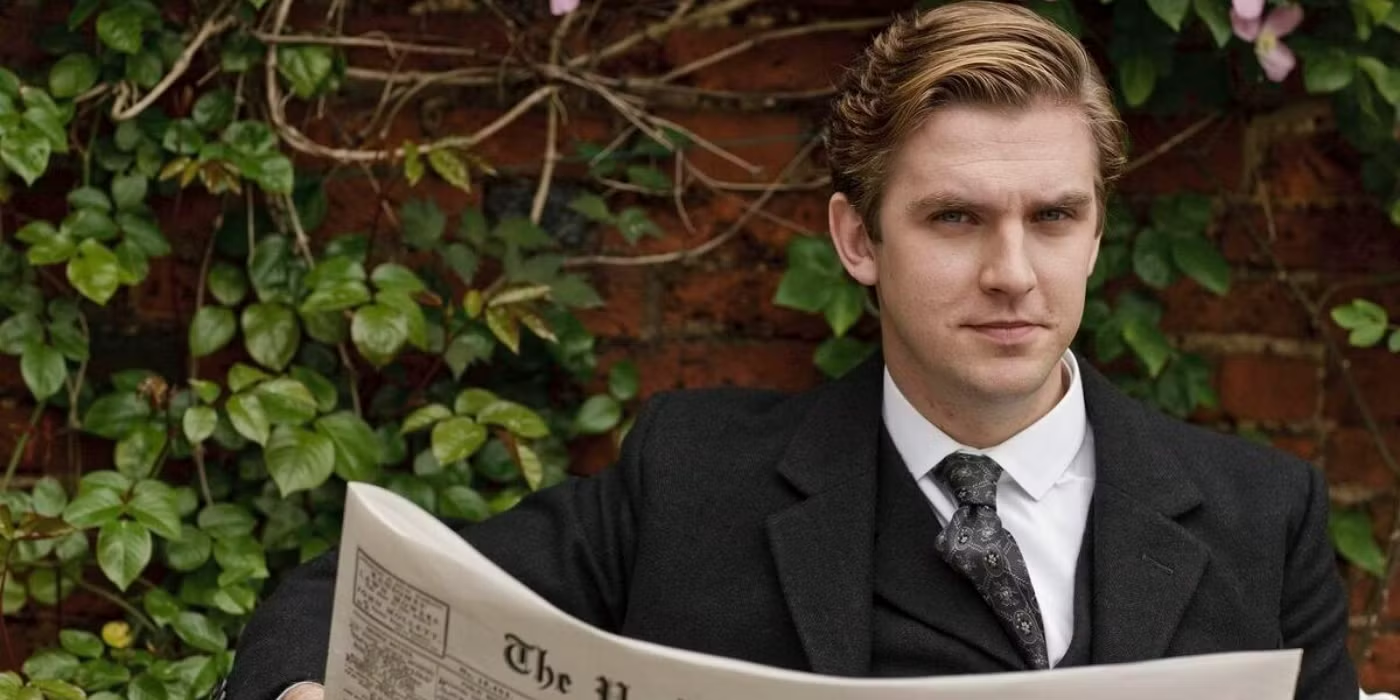
Sometimes, you hear about a movie so good, so unexpected, you go into it with no information other than the title. This rarely occurs on TV, at least for me, but watching Downton Abbey in 2020-2021 was a risk I never actually categorized as a risk.
The way I fall in love with male television characters is as follows: Is he stupid? If yes, I love him. Is he pathetic? If yes, I love him. Is he desperately in love with a woman who’s denying him just for the sake of denying him? If so, yes.
Matthew Crawley (Dan Stevens) was a deeply, deeply pathetic man when it came to Lady Mary Crawley (Michelle Dockery). He truly worshiped the ground Mary walked on, and I enjoyed every single second of watching them. He was also thoroughly loved by his family – an all-around good guy without lying about the good guy part.
I watched this show with my best friend at the time, and she’d seen the show several times over. She knew who was dying, when, why, etc. So, color me surprised when one of the select episodes she wanted to watch together, she chose Season 3 Episode 9, “A Journey to the Highlands.” Something of note regarding Downton Abbey’s season three holiday episode is that it aired on Christmas.
Luckily, I didn’t have to experience that trauma, but in a way, it felt like I still did.
Now imagine your two favorite characters, plus your favorite ship, dying and becoming heartbroken in the span of 90 minutes. Downton Abbey has never shied away from the dramatics – the series begins when the Titanic crashes – but this was so out of left field that I never saw it coming.
So I end the episode screaming, crying, throwing up, with nowhere to go. My favorite character on the show, besides Mary, has perished, and there’s no chance of him coming back. I couldn’t watch a new episode for weeks after that.
Imagine witnessing that on Christmas?! After a lovely family dinner with your family (lol), you sit down at the end of the day excited to watch a new Downton Abbey after a few months of it being off air. Then, Mary goes into labor, has the baby, and Matthew dies.
It’s truly a rip-the-bandaid-off kind of heartbreak, but the pain lingers and lingers until even now, years later, when I’m writing for this piece on the most devastating character deaths.
Erin Strauss (Criminal Minds) – Lara Rosales

When watching Criminal Minds, one doesn’t expect a viewer to say their favorite character is the BAU Section Chief, who pops up every once in a while. But I guess I was the exception because Erin Strauss (Jayne Atkinson)quickly became my favorite, and I looked forward to every episode that included her name. Her episodes were rare, and, at first, her relationship with the BAU wasn’t ideal. It wasn’t until Morgan (Shemar Moore) confronted her about her alcoholism that her attitude changed, and we could see she actually cared about the team.
Her death came around during Season 8, and it was probably one of the saddest of the show — a lot to say for a show that is surrounded by death.
Watching Strauss die was like watching an era of the show come to an end.
There is a before and after Erin Strauss that’s clear to see on Criminal Minds. No other Chief or Director could ever compare to her. As great as seeing Emily Prentiss (Paget Brewster) in charge, she belongs in the BAU, not in command of the entire section.
Strauss was the kind of boss who stood by her team and protected the BAU whenever someone tried to disarm it. Still, that’s not the reason her death was so devastating. It was hard to watch her be taken out by something she had been fighting against for so long.
The Replicator makes Strauss’s death look related to alcohol, making it seem as if she had a relapse. This is a disrespectful death and a dishonor to who she was. No death at the hands of an unsub is honorable, but hers tainted all the work she had put into bettering herself throughout the years.
Will Gardner (The Good Wife) – SGM
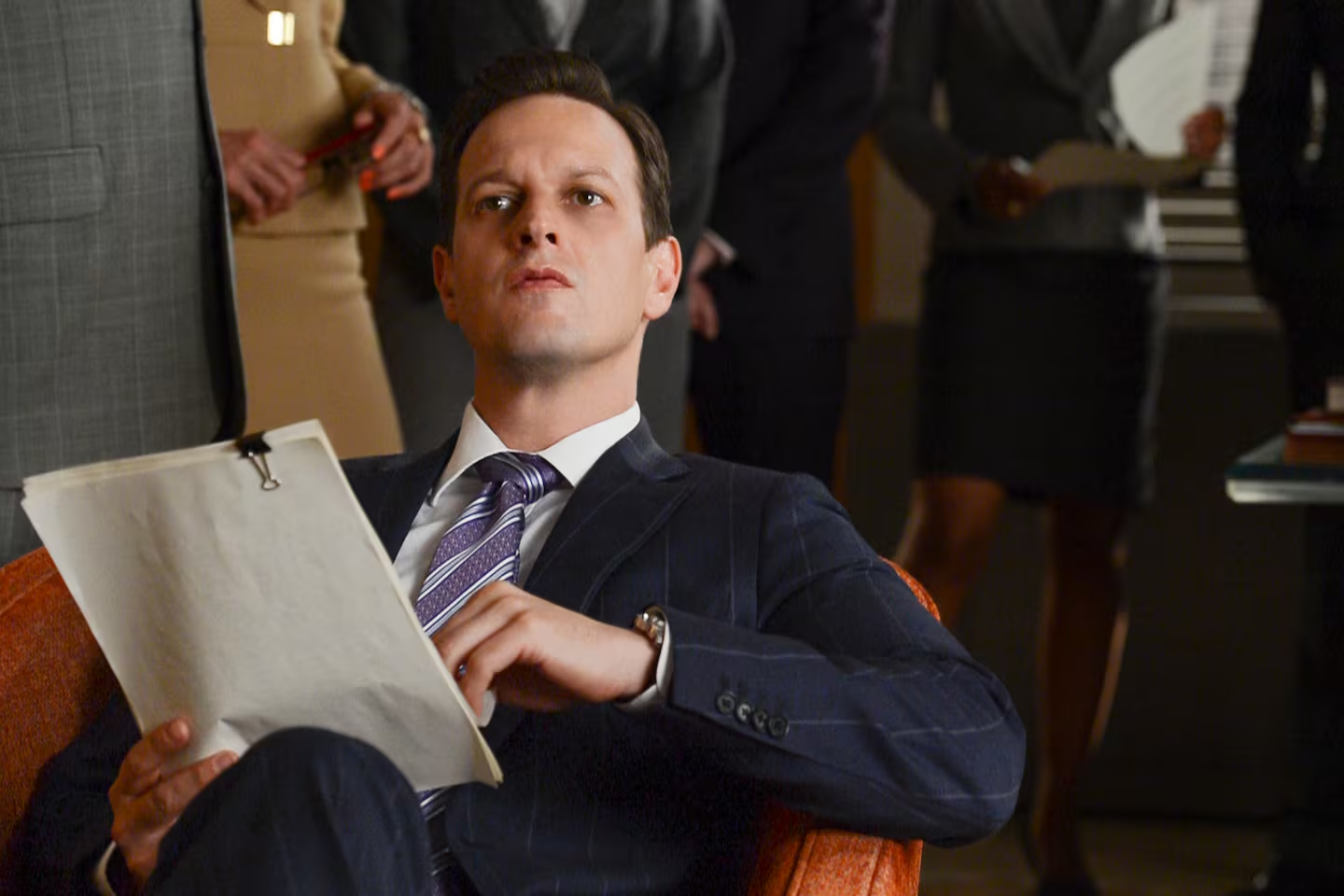
If there was one show I thought would’ve been a ‘safety show,’ aka a show where I would never have to worry about one of the leads dying, it was CBS’s The Good Wife. For four years, it was a safety show.
Enter: Season 5, Episode 15 – Dramatics, Your Honor, when the series brutally killed off fan-favorite (and my favorite), Will Gardner (Josh Charles), in a move no one ever saw coming.
Will was the love of my life on this show, aside from Diane Lockhart (Christine Baranski) – he was also the love of Alicia Florrick’s (Julianna Margulies) life, which made the loss even more devastating.
He’s murdered in cold blood by his own client, who steals a gun from a courtroom guard and goes on a shooting spree. We don’t see Will get shot – thank god – nor do we see the actual shooting happen. Instead we hear it happen from outside of the courtroom and see the reactions of everyone else around as it happens. What do we see, though? A shot of Will’s feet, with one foot shoeless, the shoe lying a few feet away, with a trail of blood…and his body.
What makes the death devastating isn’t just how shocking it was to the audiences – it’s seeing the reactions of those who loved him most. From his work wife, Diane, to Kalinda (Archie Panjabi), his work sister, to Alicia, the love of his life, each character’s reaction obliterates you. Not only because he was so loved by them, but because earlier in the episode his last moments with each of them individually truly sum up the kind of relationship he had with each of them. Especially when Alicia finds out about his death, because any avid viewer of the show knows that they were the love of each other’s lives, even if they had been broken up for two seasons.
When Dramatics, Your Honor aired, I was on a cruise – with no WiFi. And because no one knew he was going to die, and everyone who knew me knew I loved him, when I was back on land the Monday after the episode aired, my notifications on Twitter were blown the fuck up. Not a single person spoiled what happened – they all just said, ‘can’t wait for you to watch the episode!’ because one thing about your friends is that they’re going to be absolutely diabolical when they know something is about to ruin your life.
And, wondering why they were so excited for me to watch the episode, I started running through the possibilities – by searching Twitter for specific keywords. Had one of my favorite recurring characters returned? No. Had Willicia gotten back together? No.
Not finding anything on twitter that would answer my question, I did the next best thing: I went on the CBS website.
The first thing I saw was a video entitled “Will’s Dead Body,” which led to me saying “NO” so loudly in the car that my sister turned around to ask me what was wrong. I was upset for days after I finally watched the episode.
I loved Will Gardner.
Like, a lot.
So much so that I’ve never been able to rewatch The Good Wife, which, in retrospect, isn’t really a loss because the show lost the plot after losing the character who was its heart.
Lane Pryce (Mad Men) – Ana de Castro

Can death reflect the life that was lived? Narratively, yes. Lane Pryce (Jared Harris) died as he lived, for what he lived, where he lived. At work. Hanging behind his door, hidden. Silently, not to bother anyone.
I write this as if I’m writing an eulogy. For a friend? No. He wasn’t a friend. But I understood him all too well. Lane, the accounting mastermind treated like a disposable secretary. A man who made a life out of being disregarded, unfailing. What happens when the perfect employee makes a mistake?
“Commissions and Fees” is the story of a man who was never told he didn’t need to be perfect to be enough.
Rejected by Don (Jon Hamm), disgraced and self-loathing, Lane’s suicide comes from internalized shame. Don forced him to resign after finding out he had temporarily stolen $7,500 from the company, forging Don’s signature in the process – faking someone’s identity is apparently too sinful of a concept for Dick Whitman to accept.
Secretly, I have always believed that if Roger Sterling (John Slattery) or Pete Campbell (Vincent Kartheiser) had done it, Don would have behaved more kindly. Yet, he failed the one who needed his empathy the most. That’s the tragedy: The other two wouldn’t remember the mistake by the end of the year. For Lane, he had become the mistake, stained dramatically and eternally.
I have nothing in common with his role in the Mad Men narrative: the by-the-book British man finally corrupted by American greed and the Draper way of life—whiskey, steak, and affairs. Not that Don was to blame for the complete corruption. Lane acted according to what he wanted, trying what he had never tried before. But his life made his flaws hang too heavy on his shoulders.
Lane always upheld impossible standards and reaped disappointment. Humiliated by his father (including the alluded but never addressed physical abuse), unloved by his wife, and unappreciated by his peers to live for everyone else’s expectations except his own. Personally, his death had a compassionate effect. A reminder of the burden of not forgiving oneself. A reflection on the roots that make people like him and me chase things infallibility when all we needed was a pat on the back. In there lies the irony: In his brilliant three-piece suit disguise of efficiency, Lane delivered the wonderful performance of a man who had it all together by himself, no need for encouragement. But he did need it. I do. We all do.
It breaks my heart. He left without knowing he was more than numbers on a page because no one told him he was. For what’s worth, he was a hell of an accountman. And yes, I agree with Joan (Christina Hendricks). He was the best among them all.



You must be logged in to post a comment.